Less Gold, More Statement: The Design Philosophy Reshaping Fine Jewelry for the Modern Collector
For most of its recorded history, fine jewelry has operated on a relatively straightforward equation: more precious metal, more gemstones, more visual mass—more prestige. A substantial gold cuff signaled wealth. A layered collar of diamonds announced arrival. The vocabulary of luxury was written in volume.
That equation is being rewritten.
Across American design studios and in the collections of the country's most forward-thinking luxury buyers, a distinct philosophy has taken hold—one that treats negative space as a design element, geometric precision as a form of opulence, and material scarcity as a deliberate aesthetic choice rather than a compromise. Call it minimalist maximalism: the art of making a great deal of impact with a carefully considered amount of gold.
The Architecture of Absence
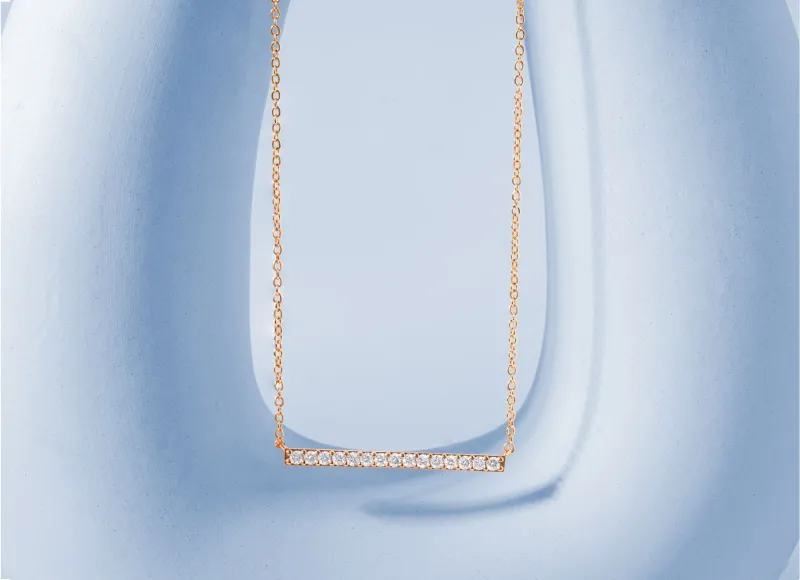
To understand minimalist maximalism in jewelry, it helps to borrow a concept from architecture. In the hands of a master, an empty room can be more commanding than a furnished one. The absence of clutter does not diminish presence—it concentrates it. The same principle, applied to a fine gold piece, yields something remarkable: a cuff with a single precise cutout that draws the eye more effectively than a cuff twice its weight. A pendant whose meaning is carried not by its mass, but by the tension between its solid form and the space it frames.
Designers working in this mode are not minimizing the gold—they are deploying it strategically. Every gram is intentional. Every edge is considered. The result is jewelry that rewards close attention, that reveals itself gradually, and that communicates a sophistication entirely distinct from the language of abundance.
"There is a discipline to working this way that clients immediately recognize," notes one Los Angeles-based designer whose geometric gold collections have attracted a devoted following among West Coast collectors. "Anyone can add more. It takes real mastery to know what to remove."
Precision as Prestige
The technical demands of minimalist maximalist design are, counterintuitively, often greater than those of more ornate work. When a piece relies on volume and layering, small imperfections can be absorbed into the overall composition. When a piece relies on a single clean line or a precisely calibrated void, there is nowhere to hide. The tolerances are unforgiving.
This is part of what drives value in this design category—and part of what makes it legible as luxury to those who understand the craft. A collector who can identify the difficulty of achieving a particular finish on a thin-gauge gold form, or who appreciates the engineering required to make a structurally open piece wear with the weight and balance of a much more substantial one, is reading the piece on a level unavailable to the casual observer.
For the community of buyers who have moved beyond acquiring jewelry as a display of wealth and toward acquiring it as a form of connoisseurship, this depth of engagement is precisely the point. The piece becomes a conversation, not a declaration.
Material Scarcity as a Design Argument
One of the more provocative ideas embedded in this movement is the notion that using less gold—used with exceptional intentionality—can justify a higher price per gram than more conventional, material-heavy designs. This is not merely a designer's argument; it is increasingly the position of serious collectors.
The logic runs as follows: the value of a fine gold piece has never been purely material. If it were, the secondary market for designer jewelry would track the spot price of gold far more faithfully than it does. Value accrues through authorship, technique, rarity of design, and the cultural weight of a maker's reputation. A piece that uses minimal gold but represents the distilled design vision of a celebrated craftsperson may carry more intrinsic and market value than a heavier piece of unremarkable provenance.
This argument is gaining traction in American collecting circles, particularly among buyers who came to fine jewelry through an appreciation of contemporary art or architecture—fields in which the economy of means has long been understood as a marker of mastery rather than a limitation.
The Wardrobing Advantage
Beyond philosophy, minimalist maximalist jewelry offers a practical dimension that resonates with the contemporary American luxury buyer's lifestyle. The pieces are, by their nature, versatile. A geometrically precise gold ear cuff transitions from a morning board meeting to an evening benefit without adjustment. A slender, architecturally designed gold bangle layers with other pieces or stands alone with equal authority.
This versatility is not incidental—it is a design objective. Pieces conceived in this philosophy are intended to become foundational elements of a wardrobe, worn consistently rather than reserved for specific occasions. The result is a jewelry collection that functions less like a display case and more like a curated wardrobe: each piece earning its place through repeated use and sustained relevance.
For buyers building a considered jewelry collection, this has meaningful implications. Investment in fewer, more deliberately chosen pieces—each capable of carrying significant aesthetic weight without visual noise—yields a collection that coheres and compounds in value, both financial and personal.
Reading the Piece
There is a particular pleasure in wearing a piece that not everyone will immediately understand. Minimalist maximalist gold jewelry operates in this register. To the uninitiated, a slim open-form gold ring might appear understated. To the informed eye, it reads immediately as the product of serious design thinking and superior craft—a quiet signal to those equipped to receive it.
This is the defining quality of the movement, and the reason it has found such resonance among Almiad Golden's community of discerning collectors. True luxury has never required volume. It requires intention, mastery, and the confidence to let a single, perfect line do the work of a thousand.