The Golden Gesture: How America's Power Class Wields Fine Jewelry as a Language of Influence
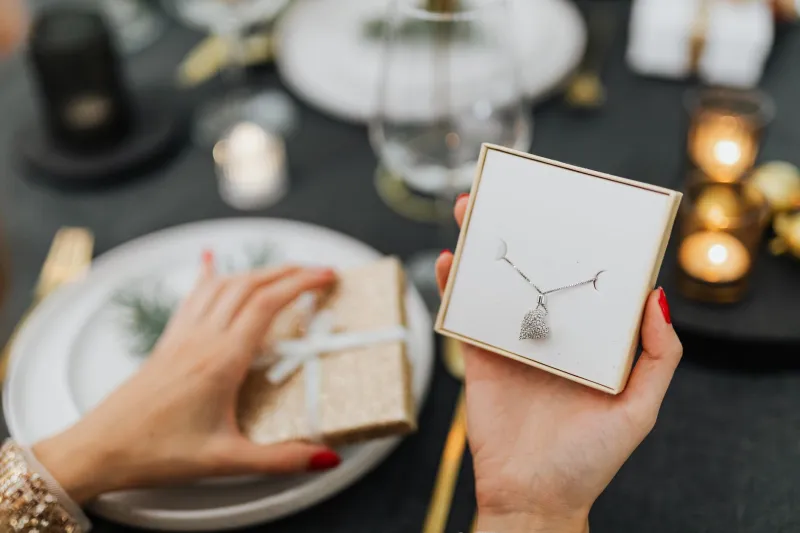
Consider the bracelet that arrived at a Washington dinner table alongside a handwritten card, presented by a Silicon Valley philanthropist to a newly appointed cabinet official. Or the pendant quietly gifted between two financial executives at the conclusion of a months-long negotiation. These exchanges do not make the news. They are not intended to. Their power derives precisely from their privacy—and from the depth of consideration that a carefully chosen gold piece communicates without a single spoken word.
In the highest registers of American social and professional life, gift-giving has evolved into a refined discipline. The gesture that distinguishes itself is never the most expensive. It is the most considered. And increasingly, that consideration arrives in gold.
Beyond the Transactional: What a Gold Gift Actually Says
The vocabulary of high-stakes gifting is one that America's elite have been quietly developing for generations, though it has received little formal examination. At its core, the practice rests on a fundamental principle: the gift must demonstrate knowledge of the recipient. A gold piece chosen with specificity—a pendant whose motif speaks to a shared experience, a bangle whose provenance connects to the recipient's heritage, a ring whose weight and finish align with an aesthetic the giver has taken care to observe—communicates something that no generic luxury item can.
It says: I have been paying attention.
This is the foundation of what might be called gold diplomacy—the use of fine jewelry as a vehicle for expressing respect, cultivating alliance, and establishing the kind of social trust that formal negotiations cannot manufacture. The practice is neither manipulative nor cynical when executed with genuine intention. It is, rather, a sophisticated acknowledgment that human relationships at the highest levels of influence are sustained by gestures that transcend the professional.
The Etiquette of the Elite Gift
For those navigating the protocols of high-stakes gifting, a set of unwritten but widely understood conventions governs which pieces are appropriate in which contexts. Understanding these conventions is as essential as the selection itself.
Occasion and register must align. A diplomatic reception calls for something restrained—a slim gold bangle, a pair of understated earrings, a pendant of quiet elegance. The piece should complement the formality of the setting without overwhelming it. At a private dinner among close associates, greater expressiveness is permitted; a more sculptural piece, a heavier chain, something that reflects a deeper familiarity between giver and recipient.
The metal speaks before the design does. Gold, in the context of elite gifting, carries inherent meaning. Its durability signals permanence. Its warmth conveys humanity. Its historical association with sovereignty and achievement lends the gesture a gravitas that silver or platinum does not replicate. When America's most powerful figures choose gold, they are drawing on a symbolic register that operates across cultures and centuries.
Provenance elevates the gesture. A piece from a storied American jeweler—or better still, from a private atelier whose name requires explanation—signals a level of effort that a department store purchase cannot. The giver who presents a commission, or a piece with a documented history, demonstrates that the gift required not merely expenditure but investment of time and thought.
Gold at the Intersection of Culture and Commerce
America's most consequential social exchanges frequently occur at the border between culture and commerce—at museum galas, foundation dinners, and the private gatherings that precede or follow moments of significant professional transition. It is in these liminal spaces that fine jewelry gifting operates with particular effect.
Consider the context of a farewell gift presented to a departing board member, or the welcome offered to a new partner joining a family office. In both cases, the gold piece functions as a marker of transition—acknowledging what has been while gesturing toward what is to come. The piece becomes a material record of the relationship, worn on the body rather than stored in a drawer.
For America's philanthropic class, gold gifting has also emerged as a means of expressing gratitude to cultural institutions. A private collector who presents a museum curator with a piece from their personal collection—or commissions a piece in acknowledgment of a significant acquisition—participates in a tradition of material generosity that reinforces the social bonds sustaining cultural life.
Choosing Wisely: A Practical Framework
For those who wish to engage in this practice with the care it demands, a few principles merit consideration.
First, research before selecting. The most effective gold gift reflects genuine knowledge of the recipient's aesthetic preferences, cultural background, and personal history. A piece whose design connects to the recipient's heritage—a motif drawn from their family's country of origin, for example, rendered in American gold—demonstrates a level of attention that transforms the object into something deeply personal.
Second, engage a specialist. The most distinguished gifts are rarely sourced from retail floors. A private jeweler or atelier consultant can assist in identifying or commissioning pieces that align with both the occasion and the recipient, while maintaining the discretion that high-profile gifting requires.
Third, consider the documentation. A fine gold piece presented with its provenance—a note from the maker, a record of the materials, a brief history of the design's inspiration—becomes something more than a gift. It becomes a narrative. And narratives, among those who value the weight of history, are among the most powerful gestures of all.
The Enduring Currency of Gold
In an era when influence is frequently exercised through digital channels and professional relationships are often maintained at a remove, the physical gesture of presenting a gold piece carries an intimacy that no other medium can replicate. It requires proximity. It demands thought. And it leaves behind something tangible—an object that will be worn, admired, and remembered long after the occasion that prompted it has receded.
For America's elite, that permanence is not incidental. It is the entire point.