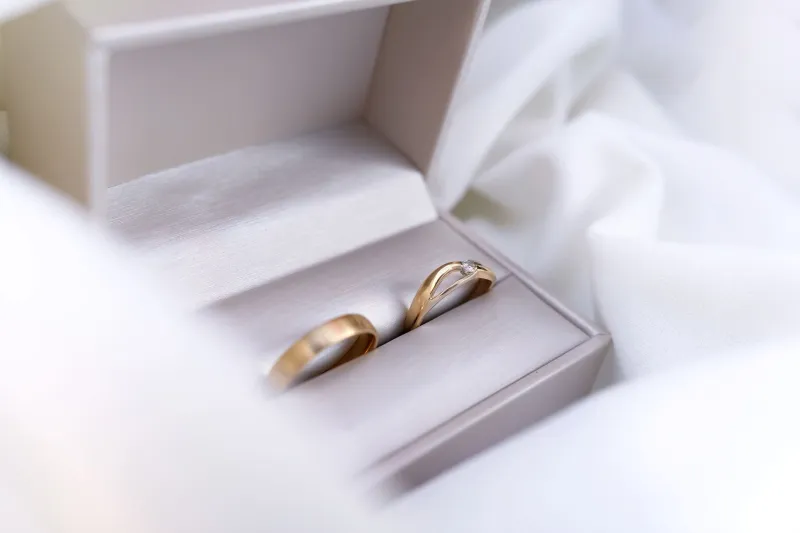
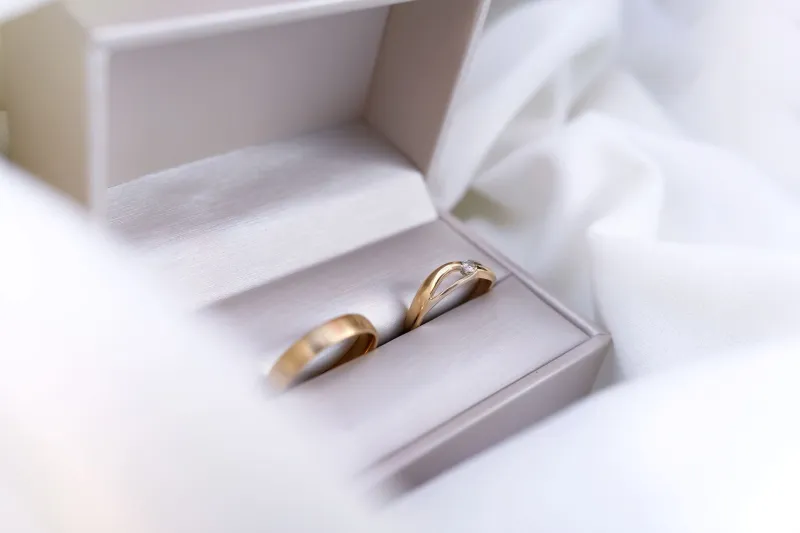
Crafted for One: Inside the Secretive World of America's Bespoke Gold Ateliers
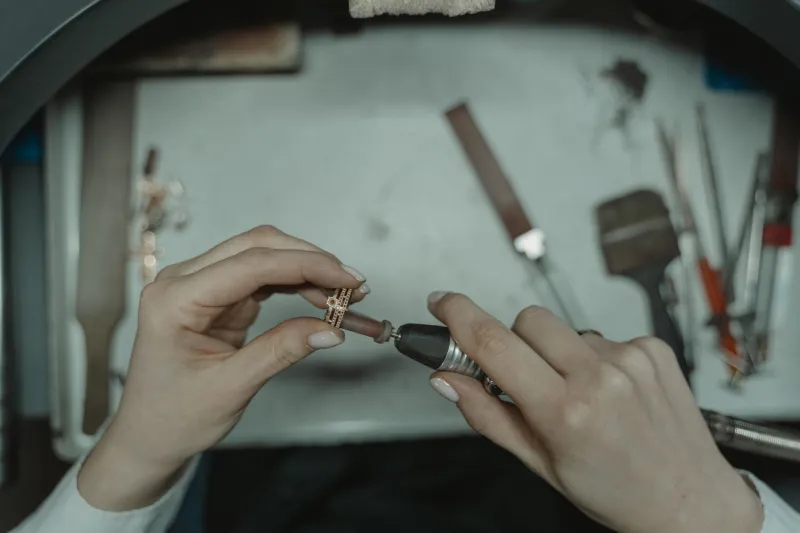
There are no price tags in these rooms. No glass cases, no sales associates, no seasonal promotions. What exists instead is something far more deliberate: a worktable worn smooth by decades of use, a jeweler's loupe resting beside a half-formed wax model, and a conversation that may last weeks before a single gram of gold is ever melted. Welcome to the atelier—a space where American luxury has arrived at its most concentrated and most personal expression.
For a growing segment of the country's wealthiest collectors and connoisseurs, the retail jewelry experience has become insufficient. Not because the pieces themselves lack quality, but because the act of choosing from an existing inventory no longer satisfies a deeper impulse: the desire to create something that has never existed before and never will again.
The Commission as Status Symbol
In affluent American social circles, the conversation has shifted. Where once a recognizable brand name or a hallmark from a storied house was the shorthand for taste and means, the new signal is far subtler. It is the piece that cannot be identified, the bracelet that prompts the question rather than the recognition. "People want to say I had this made," explains one New York-based goldsmith who has served private clients for more than twenty years and declines to be named publicly. "That sentence carries more weight now than any logo."
The commission process at the most exclusive ateliers begins not with a sketch but with a dialogue. Clients are invited to share references—heirlooms, photographs, architectural details, even passages of literature—that speak to the emotional register they hope the piece will occupy. A master craftsperson then translates those abstractions into form, producing wax or resin prototypes before a single ounce of gold is committed.
This intimacy is not incidental. It is the product itself.
The Artisans Behind the Work
Across the country, a small constellation of ateliers has cultivated reputations so carefully guarded that their clientele are largely discovered through personal referral. In the Diamond District of Midtown Manhattan, studios that present unassuming storefronts conceal workshops of remarkable sophistication, where goldsmiths trained in European traditions—many in Antwerp, Florence, or Paris—apply techniques that have changed little in two centuries to designs that are entirely contemporary.
In Los Angeles, the aesthetic tends toward the architectural. Clients commissioning work from West Coast ateliers frequently cite the influence of modernist design, requesting pieces that feel structural rather than ornamental—geometric forms in 22-karat gold that wear more like sculpture than jewelry. One craftsperson working from a studio in Silver Lake describes a recent commission: a cuff bracelet for a film industry executive, inspired by the cantilevered forms of mid-century California residential architecture. The process took four months. The client attended three separate fittings.
In the South, particularly in cities such as Atlanta and Nashville where new wealth has arrived with considerable velocity, a different tradition is taking shape. Clients here frequently seek pieces that honor family history—renderings of ancestral crests, motifs drawn from regional botanical life, or reinterpretations of estate pieces passed down through generations. The goldsmith, in these cases, functions as something closer to a biographer.
The Language of the Commission
What distinguishes a true atelier commission from a jeweler who offers engraving or modest customization is the degree of collaboration and the completeness of the creative investment. At the highest level of bespoke work, the client is not selecting options from a menu. They are co-authoring an object.
This requires a particular kind of client—one who is comfortable with ambiguity, willing to trust a craftsperson's judgment, and prepared to invest time as generously as capital. The most significant commissions at leading American ateliers can require upward of six months from initial consultation to delivery, with costs that begin well into five figures and extend considerably further depending on the complexity of the work and the materials involved.
For many clients, that investment is precisely the point. The duration of the process, the number of conversations, the revisions and refinements—all of it accumulates into a provenance that no retail purchase can replicate. The piece arrives not merely as an object but as a record of an extended creative relationship.
Wearable Art and Its Implications
The language of fine art has increasingly migrated into the world of bespoke jewelry, and not without reason. The most accomplished atelier pieces exist in genuine tension with the distinction between adornment and art object. Several American collectors have begun cataloguing their commissioned gold pieces alongside works on paper and canvas, consulting with fine art appraisers rather than—or in addition to—traditional jewelry valuators.
This convergence has implications for how these pieces are insured, documented, and eventually transferred. Unlike production jewelry, a bespoke commission carries no comparable market comparables. Its value is established through a combination of material cost, the maker's reputation, the hours invested, and—increasingly—the identity of the client who commissioned it. Provenance, in this context, runs in both directions.
The Future of the Made-to-Order Gold Piece
As personalization continues to ascend as the defining luxury of the current era—outpacing even the most prestigious brand affiliations—the atelier model shows every indication of expanding. A new generation of goldsmiths trained at institutions such as the Fashion Institute of Technology and the Gemological Institute of America is entering the field with both traditional craft skills and fluency in digital design tools, opening possibilities for commissions of even greater technical complexity.
For affluent Americans who have grown weary of the mass-premium market—the sense that luxury has become too accessible, too legible, too uniform—the atelier offers something genuinely rare. Not merely a beautiful object, but an experience of creation. Not ownership, but authorship.
In that distinction lies the quiet revolution that is reshaping American fine jewelry from the inside out.